By Abigail Brandwein
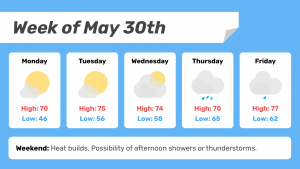
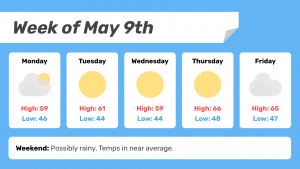
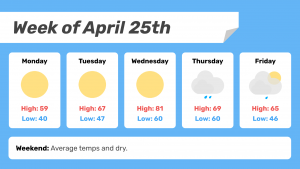
New York temperatures this Spring have been a display of climate change never seen before, showcasing an abnormal, yet frequent swing from temperatures in the low sixties to the low eighties. The inconsistent day-to-day variation has caused an atmospheric anomaly within IHS classrooms, during which heating and cooling systems can’t keep up with the changing weather.
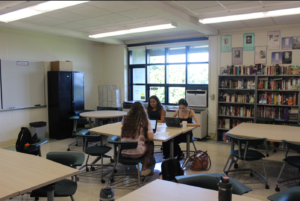
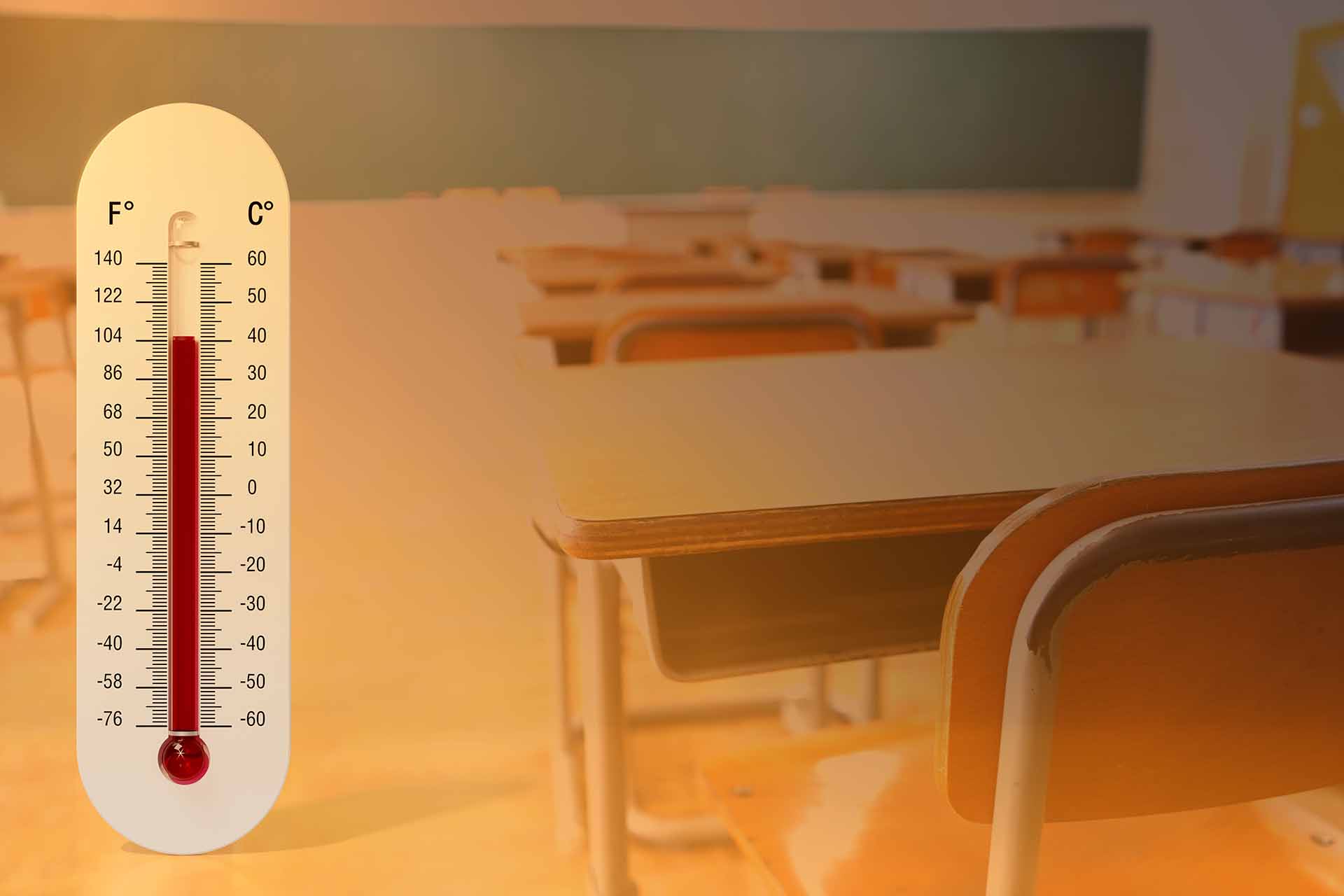
The State of New York mandates that public school districts provide heat to all rooms between October 15th and May 31st, deemed the “cold season.” But this Spring, rising temperatures have made heated classrooms uncomfortable, detracting from students’ learning experiences. Many rooms, specifically science classes, have reached temperatures in the high 80s — hotter than it is outside.
“It’s really hard to focus because of the heat,” said Julia Platzman, a junior at IHS. “It’s too uncomfortable to really pay attention”.
Furthermore, having heating systems working for excessive amounts of time expends the school’s budget and wastes significant energy. During peak usage, an average high school spends close to 10,000 on energy, highlighting substantial HVAC costs for larger buildings. Heating classrooms that are already facing higher temperatures from weather conditions is both uneconomical and bad for the environment.
Because legal requirements prevent heat from being turned off until the end of May, teachers and administrators are urged to use heat mitigation methods, such as using fans, closing window shades, or limiting heat-producing equipment.
“The biggest challenge regarding temperature in the classroom comes as we transition to fall and spring. At those times we can see classrooms become very cold (the fall) or very hot (spring). These highs and lows make it very difficult for students to concentrate, especially when the rooms become too hot,” said Alex Lengers, a science teacher at IHS. “Fortunately, the school has a plan for dealing with these extremes which will allow us to maintain our learning in a more comfortable setting.”
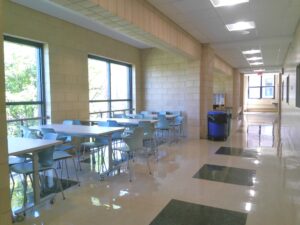
Starting on September 1st, 2025, new legislation requires districts to take protective action for rooms that reach 82 degrees, and clear rooms that reach 88 degrees. These new laws prompted an email from Principal Jon Hirsch, saying that rooms with unsuitable temperatures will be evacuated and relocated to areas on campus where learning can proceed comfortably. Common areas like the cafeteria, auditorium, and campus gym will be used in this case.
Superintendent Mara Ratesic sent a similar email, detailing the time-consuming nature of switching from a heating to cooling system.
“The cooling tower needs to be cleaned and tested, chemicals need to be added to both the heating and cooling system, switching immediately after one system has been running can cause damage to the boilers or pipes when the water temperature fluctuates so rapidly,” she said.