By Aaron Strow
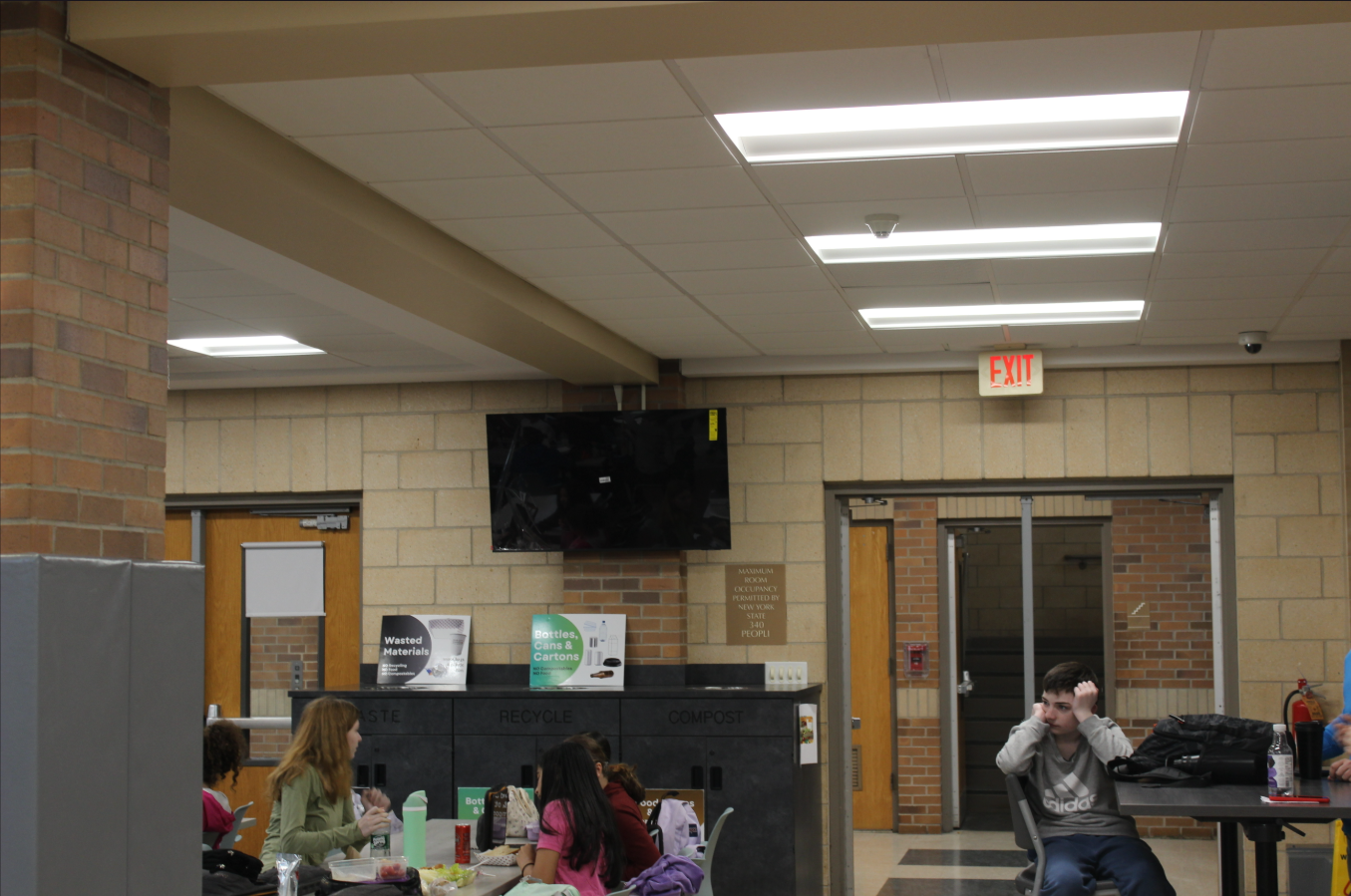
The recent addition of televisions in the school cafeteria has quickly become one of the most noticeable changes to our campus environment. While some students and teachers worry that the screens may become a distraction, the TVs have the potential to improve the overall cafeteria experience. If used correctly, they can provide entertainment during lunch, create a more immersive experience, and even help bring students together as a community.
It’s a long-held belief that a student’s lunch is their only real chance to unwind during a busy school day. After several hours of classes, homework, and tests, students often look forward to a chance to relax during lunchtime. In helping with this unwinding, the televisions can provide entertainment ranging from sports coverage to school-made content.
David Ufer, a sophomore at Irvington High School, said: “The beginning of my school day is very stressful, so it could be good to be able to watch TV in between classes and get my mind off of all the work I have.”
However, the introduction of televisions in the cafeteria will bring notable intrusions on the cafeteria environment, which has been able to strike a balance between social and calm.
For example, unavoidable images and sounds on TVs may make it harder for many students to complete their work in the cafeteria. Administrators may simply redirect people to the library or academic commons, but both spaces lack the right mix of community and comfort.
In explaining his own predicament, Joseph Brandstaedter, a sophomore at IHS, told the Paw Print that, “Because of the TVs, the lunch room may be too loud now, and I would be forced to work on my schoolwork in a different area, without sitting with my friends.”
Even with this fact, the addition of the new televisions can create an elevated sense of community throughout both the middle and high schools. Imagine students of any grade visiting the cafeteria and bonding with each other over shared content. This could be a way to enhance the ties within the student body and allow for students to interact under similar circumstances.
Along with this, the school could have a much easier way to get messages across; whether this be through student-driven reports or regular announcements, both could be broadcast through the TVs. Similarly, reminders of school events via the new screens might solve the major problem of students missing important notifications.
Overall, these new televisions may have brought a new source of controversy, yet they will provide many positive outcomes for students and staff alike. By providing entertainment, strengthening community, and streamlining communication, the televisions in the cafeteria are one of the best extensions that the school could have added.