
By Owen Liu
What do you think of when you hear these words, “Year Round School”? Is it disgust, curiosity, or agreement? While many students may find this idea to be appalling, I believe that year round school could be far more beneficial than our current 180 day school year for learning and well being. Yes it will be a big change but one which will lessen summer learning loss and prevent burnout from students and teachers.
Firstly, the standard learning gaps typically found after summer breaks are much less prominent in a year round model. It’s as simple as the fact that shorter breaks give less time for the mind to lose the information which it has acquired. Due to this, transitions from grade to grade will be more seamless with less of a reliance on individually completed summer work.
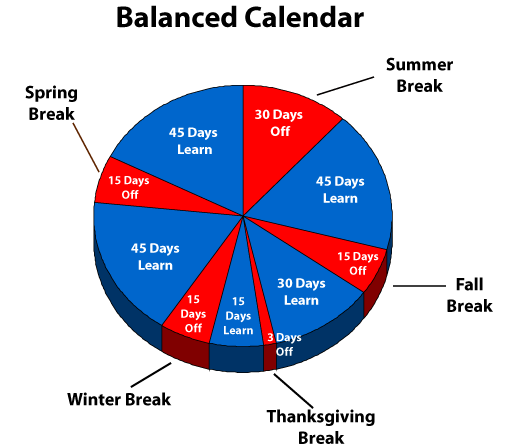
Moreover, shorter and more equally distributed breaks integrated into this new schedule would lead to more rejuvenation during the actual school year. No longer will students have infrequent breaks where maximized relaxation fades past the second week, instead periodic breaks will balance preventing feelings of idleness and burnout.
Low income students will also get a significant increase in their comparative opportunities. Typically, many students won’t have access to pricey educational summer activities which leaves them at a disadvantage. However, with an introduction of year round school, this issue would be mitigated.
Interviewing my fellow students brought me a range of opinions. While sophomore Paul van Haetsdaele mentioned how the idea of year round school sounds “intriguing” as you get more holidays and breaks as opposed to traditional school years. Brandon Chirinos another sophomore was clear about his disdain, “Yeah no, year round school sounds horrendous. Never in my life would I wanna do that.”
Overall, the year round school could be very beneficial for students as it gives them more opportunities to rest during the school year, lowers the standard learning gap caused by the summer, and gives equal opportunities to less advantaged students.