By Abigail Brandwein
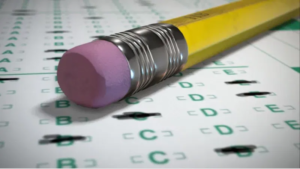
Standardized testing has been the backbone of the American educational system. These exams are marketed as fair, objective measures of student achievement, but in reality, they often do more harm than good. Instead of fostering genuine learning, standardized tests reduce education to the grade at the top of a paper, and leaves both students and teachers at a standstill.
First of all, standardized tests create overwhelming pressure. Students are told that a single test score can determine huge aspects of their future, such as whether they qualify for advanced classes, scholarships, or even the outcome of their college admissions process. This can lead to anxiety and burnout, rather than the love of learning that schools should be fostering. A student’s intelligence and potential cannot be accurately captured in a few hours with a bubble sheet.
Moreover, these tests fail to account for the differences in learning styles and preferences. Not all students excel at timed, multiple-choice exams. Some may demonstrate their understanding of subjects better through projects, essays, or presentations.
“Personally, I learn better when I don’t have to test,” says Julia Platzman, a junior at Irvington High School. “It gives me the room to really explore a subject, instead of just learning what I know I’ll be quizzed on”.
Yet the current system places them at a disadvantage simply because they don’t fit into a one-size-fits-all mold of the ideal student. This especially harms students from underfunded schools, who may not have access to test prep resources.
Teachers, too, are pressured to “teach to the test”, focusing narrowly on what will appear on standardized exams instead of encouraging critical thinking, creativity, and real-world problem solving. Education becomes about memorization rather than exploration, stripping classrooms of richness and individuality.
If the goal of education is to prepare students for life, then standardized testing fails students miserably. Life does not come with answer choices. It requires adaptability, collaboration, and creativity – skills that can’t be measured on a scantron. It’s time to rethink how we evaluate students and shift toward more authentic, holistic assessments that reflect true learning.