By Jarrett Ourman
As the years go by, NIL becomes more popular—and more expensive. Because of this, many college athletes are increasingly interested in extending their careers beyond the traditional four years of eligibility. While NCAA eligibility rules are designed to ensure that student-athletes are academically prepared and that competition remains fair, new opportunities have led more players to look for ways to stay longer.
The NCAA is divided into three divisions: Division I, Division II, and Division III. In Divisions I and II, schools require athletes to be certified through the NCAA Eligibility Center before they can participate in sports programs. Division III schools, however, do not use the Eligibility Center in the same way, though they still maintain academic expectations for their athletes.
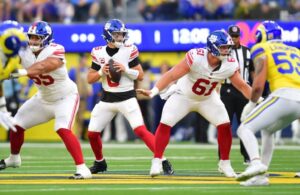
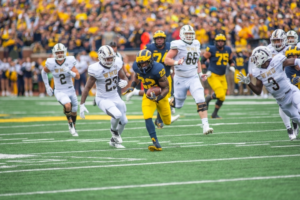
Although meeting eligibility requirements to compete is often manageable, the real challenge lies in athletes attempting to extend their playing careers beyond their four-year academic window. Some athletes have successfully done this. For example, Carson Beck (Miami QB) and Tyler Shough (New Orleans Saints QB) both spent extended time in college football. Shough played seven years at the collegiate level—competing for Oregon, Texas Tech, and Louisville—before being drafted in 2025. His extended career resulted from multiple serious injuries, along with the additional year of eligibility granted during COVID-19. Similarly, Beck spent six years playing for Georgia and Miami. His extended time came from a combination of the COVID-19 eligibility extension, a redshirt year in 2020, and beginning his college career at a young age.
Many athletes who extend their time in college are motivated by the opportunity to maximize their performance and improve their draft stock. A recent example is Ole Miss quarterback Trinnidad Chambliss. Although Chambliss has been in college for five years, he has only played three seasons due to being redshirted during both his freshman year and, for medical reasons, his sophomore year. As of February 12, 2026, he remains eligible for another season, which he hopes to use to raise his draft position for 2027 and help lead Ole Miss back to the College Football Playoff.
This raises an important question: is it acceptable for some college athletes to receive extra years of eligibility? While some players remain in school to take advantage of NIL opportunities, others are simply trying to regain the seasons they lost due to injury or circumstance. As one perspective puts it, “I definitely think that extra years of eligibility should be granted to athletes who have missed years of playing due to injuries or being redshirted,” said Lucas Shapiro, highlighting the argument that extended eligibility can be a fair way to make up for lost opportunities.