By Nate Sloane
No matter what math class you are taking at IHS, a quarterfinal will be offered at the end of each marking period.
These quarterfinals prove extremely valuable to students. For example, if a student has a bad day on the day of a test and forgets what they studied, if they get a grade that they find poor, they can replace that grade with the grade they get on a quarterfinal.
This quarterfinal provides students who might be frustrated with their grade and work in a certain class with hope for improvement in the future.
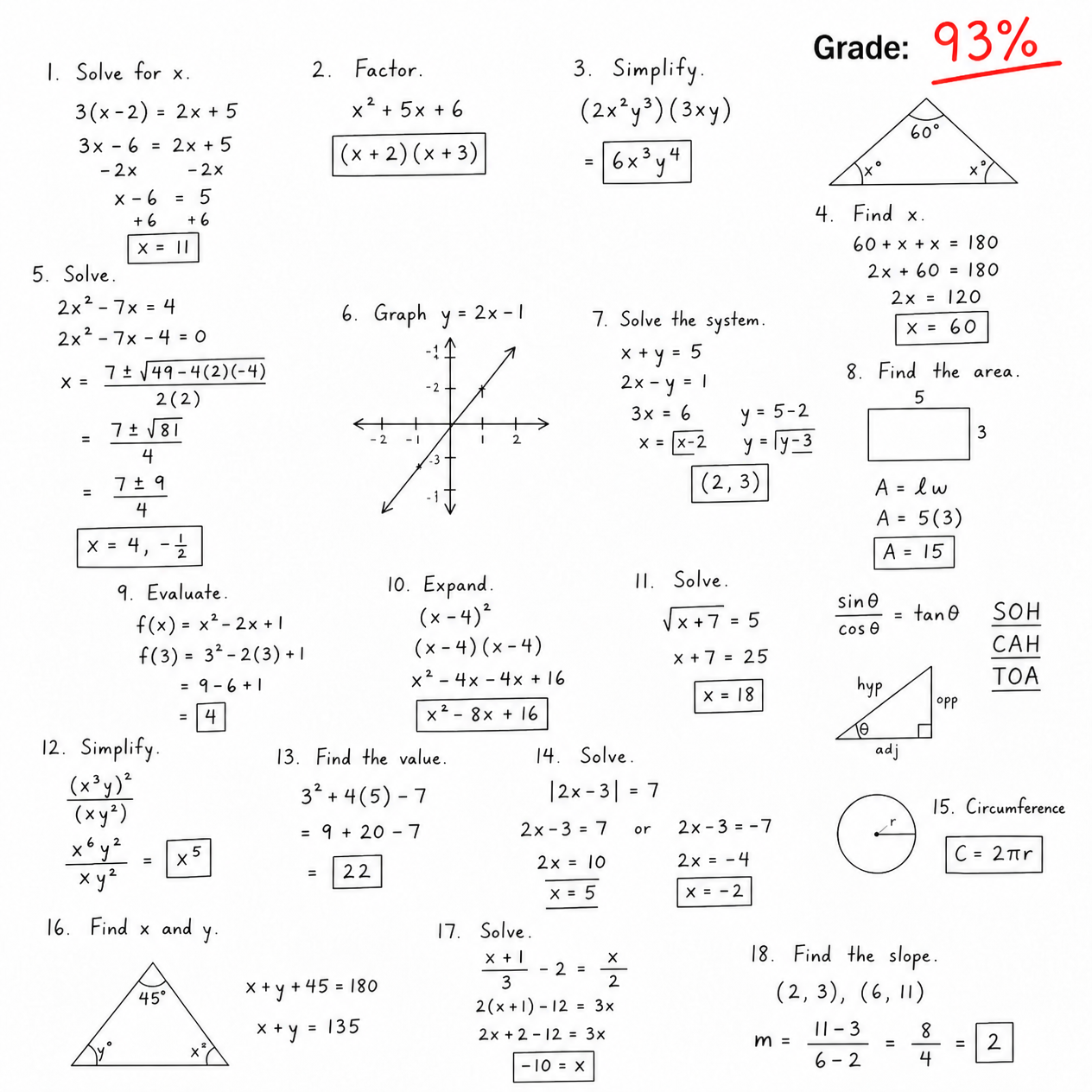
With this quarterfinal, however, the math department at IHS has carried out a policy of the highest possible grade on a quarterfinal being 93 percent.
While students are still pleased with the opportunity to replace lesser grades with this test, many students are frustrated with the limit on the potential grade they can achieve.
When asked about the 93 percent cap on quarterfinal grades, sophomore Santiago Vidalon said, “It’s absurd. What is the point of a quarter final if it’s capped? I want to have the ability to get a 100. How crazy is it if I get a 100 on a quarterfinal, and the teacher only gives me a 93? I should be able to get the grade I earned.”
Additionally, when sophomore Matthew Chuchuca was asked about this topic, he said, “For me, 100 means excellence and helps signify the hard work and dedication I put into studying for the test. If I get a 93 on a quarterfinal that I really got an A+ on, I will feel cheated and restricted by the system.”
Overall, I would tend to agree that the limit on the quarter final grade should be changed.
A 2017 research article by Devin Gorry of Utah State University demonstrated how lower grade ceilings generally worsen the way students perform in their classes and value their classes.
The article showed that when a GPA ceiling of 2.8 was implemented, there were lower grades, more student withdrawals from the class, and course evaluations worsened.
This significantly differed from when a higher GPA ceiling of 3.2 was implemented. With a 3.2 GPA ceiling, the overall GPA decrease and change in course evaluations were statistically insignificant.
If you take this article and its results into consideration and reevaluate the quarterfinal grade ceiling, it is clear why many are opposed to this 93 percent grade ceiling.
If a student knows that no matter what they do on the test, the best they can get is 93 percent, it is likely that they will study for less time and with less effort than if they knew that there were no restrictions on their potential grade.
Thus, if a student studies for a test in hopes of achieving a 93 percent, rather than 100 percent, it is highly probable that they will get a lower result on the test than they would have gotten with no grade cap.
Perhaps, if students across all math classes at IHS knew that they could get higher than a 93 on the quarterfinal, more overall hours would be put into studying for the test, and grade averages for the test would increase.
Not only is it beneficial for the grades of the students, but it would also be beneficial for the academic journey of the students.
If students were incentivized to study as hard as possible, then they would spend more time practicing questions and retaining information, which would help them in the future as math students.
While supporters of the 93 percent quarterfinal grade cap might argue that no cap on the quarterfinal grade could incentivize students to not study as hard on the other tests in the marking period, I disagree.
I think that students are constantly striving to study as hard as possible for the regular math tests in each marking period to secure a better grade and to hopefully prevent the need for a quarterfinal.