By Nuvneet Desai
After months of preparation and anticipation, students began this new school year under the newly implemented block schedule. The change had been announced during the previous year as the district explored alternatives options into replacing its traditional 42 minute class periods. Now officially in place for this school year, the new schedule has changed the structure of the school day which now includes four 80 minute blocks each day.
According to Ms. Attenello, guidance counselor and now newly appointed chair of the counseling department, one of the main reasons Irvington began exploring block scheduling was to improve the overall student experience and reduce some of the stress created by having every class in one day. Under the previous schedule, students could find themselves balancing several tests and assignments at once while constantly moving from one short period to another.
“There are times where I’m sure last year’s students had maybe three exams in one day,” Attenello said, “You had all your subjects, and it felt sort of like running on a hamster wheel.”
Before implementing the change, administrators visited other schools that already used block scheduling to see how the system worked. Attenello, who participated in those visits, said students at those schools generally responded positively to the longer periods. Some told administrators that after experiencing block scheduling, they would not want to return to the traditional 42-minute structure.
Although the schedule is still new, Attenello believes the transition has been smoother than initially expected. While there was some uncertainty surrounding the change last year, she said seeing the actual schedule helped make the new system feel less imitating for both students and teachers. She has also heard positive feedback since the school year began.
“I’ve had students come in and say, ‘I like it’, and I’ve had teachers say, ‘I didn’t think I was gonna like it, but I like it,” Atenello stated.
One of those students is sophomore Aaron Estes, who has found the schedule helpful with managing his workload. “So far it is very beneficial, as I have not had that much homework and I have more time to work on assignments at lunch,” Estes said. This is also due to the fact that the new schedule has also extended students’ lunch periods. Under the previous schedule, lunch was 42 minutes, but students now have an hour for lunch on regular days and an hour and 30 minutes on X days, which take place on Tuesdays and Fridays every week. On X days, students are expected to utilize the extra 30 minutes for extra help.
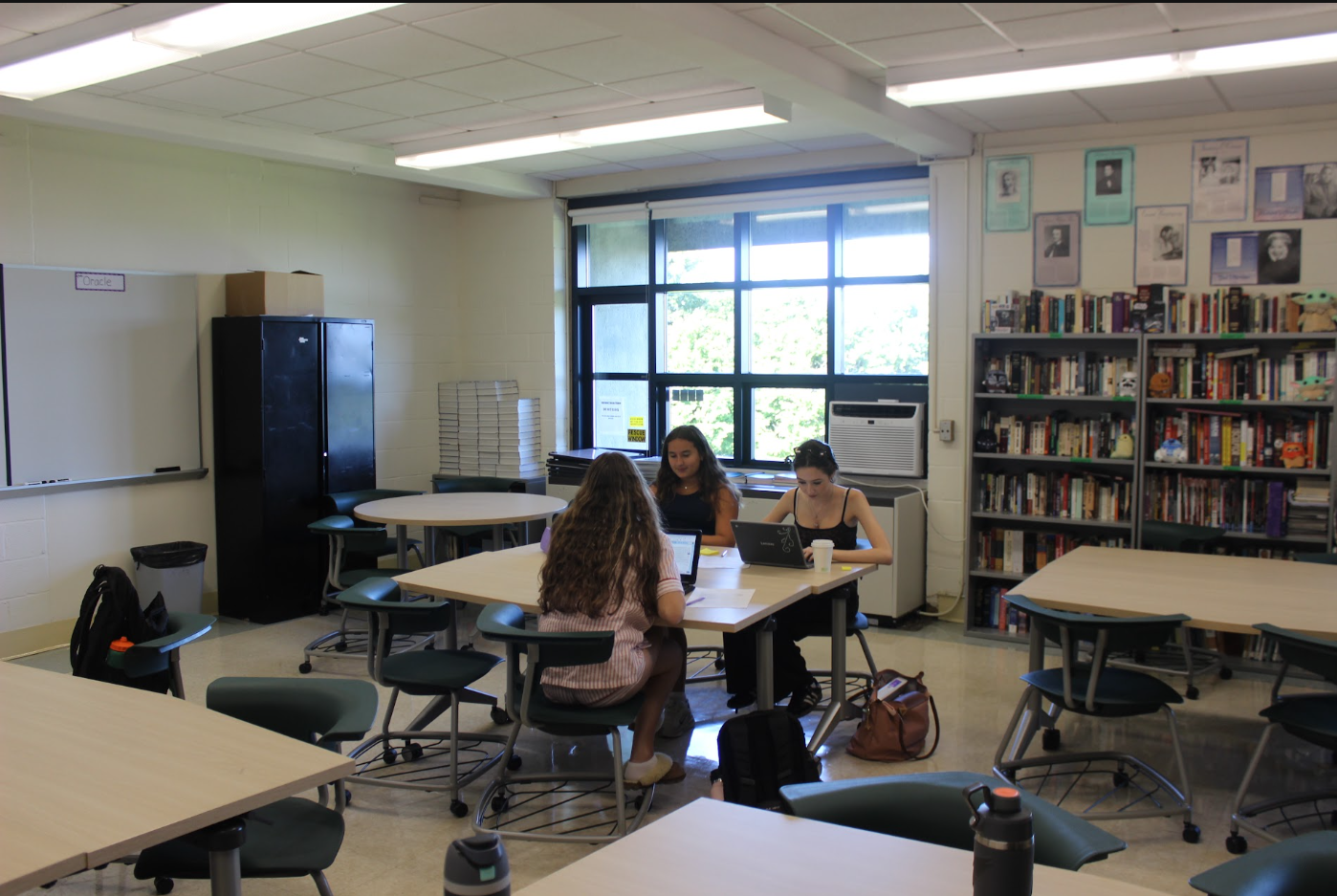
For teachers, longer periods have also created new opportunities in the classroom. English teacher Ms. Lentini, who primarily teaches project based classes like AP Seminar, said the 80 minute blocks give her enough time to combine instruction, discussion and independent work rather than having to stop an activity when a short period ends.
“For me, it works really well in terms of getting in everything,” Lentini commented. She explained that the longer periods allow discussions to “run their full course” while also giving students time for a lesson followed by practice. The additional time has also allowed her to meet individually with students and discuss their progress.
Lentini has noticed another difference beyond the amount of material that can be covered. “I feel less stressed because there’s less of an assembly line mentality of this class and this class and this class,” she said, adding that she believes students are beginning to experience that feeling as well.
However, the transition comes with challenges. Attenello acknowledged that maintaining focus throughout an 80 minute class can be difficult. “I think 80 minutes is a long time,” she said. “That probably is jarring for teachers and for students.” With teachers and students experiencing the system for the first time together, adapting lessons and learning how to properly use the longer periods effectively will remain an important part of the transition.
Although the new schedule has only been in place for two weeks, many students and teachers have already become acclimated to the change. So far, reactions from both students and faculty have been mostly positive with many appreciating the longer lunch periods and fewer classes each day, and additional time within each class. While there is still more of the school year ahead, the positive start is already an encouraging sign for how the block schedule may continue to work throughout this year and into the future.